I work at the Instituto de Astrofisica de Andalucia, doing research about exoplanets. To discover new planets across the Galaxy, I love observing all types of stars using a variety of telescopes, both in space (like JWST, TESS or Kepler) and the darkest sites on Earth (Canary Islands, Hawaii or Chile). But my favourites are the cool red stars we call M dwarfs, which are the most numerous in the Milky Way and give us the best chance to study terrestrial planets like ours and their atmospheres.
CV
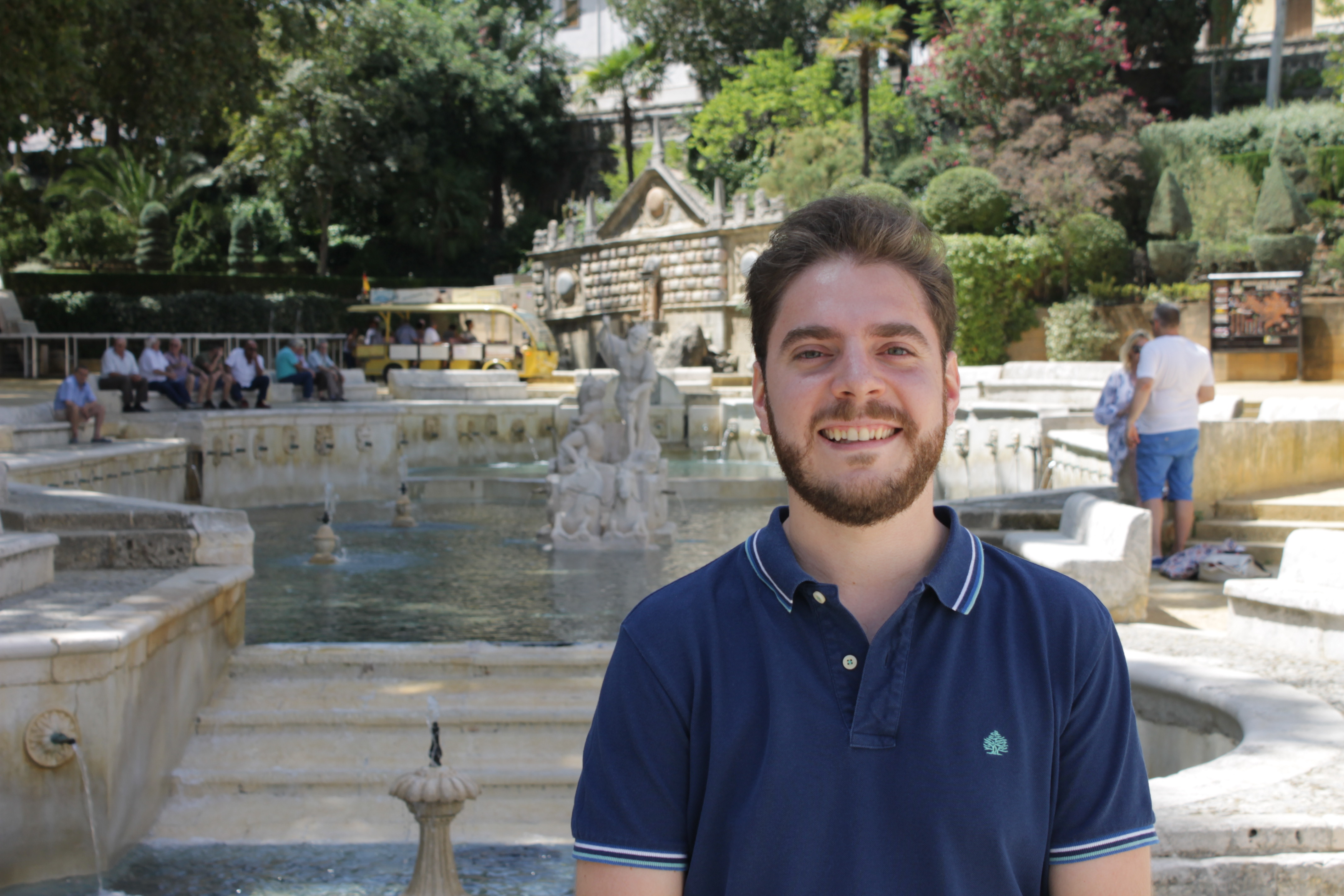
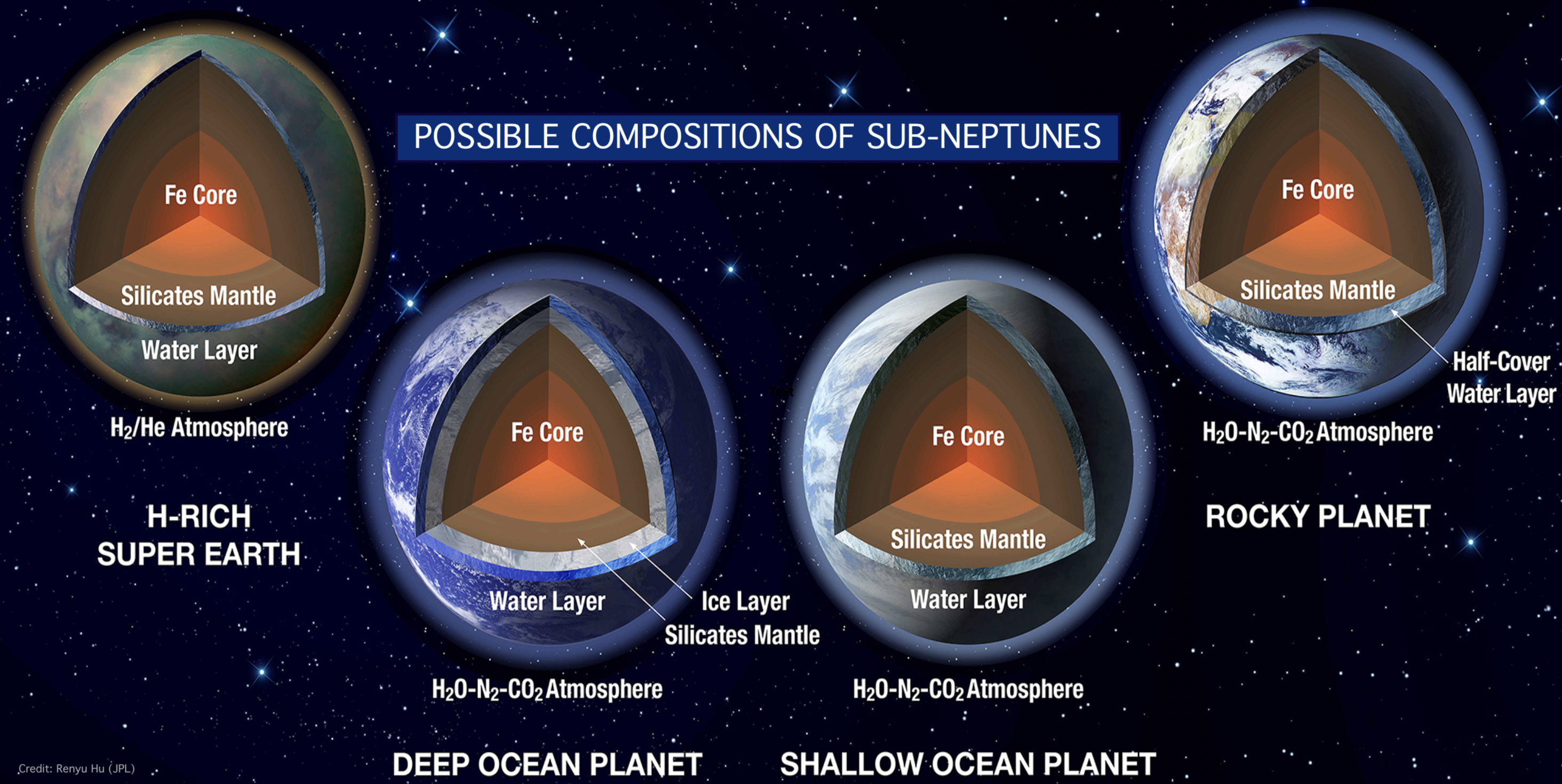
I am from Priego de Cordoba, a very beautiful village in the south of Spain. My research focuses on understanding how planets form and what are they made of. In particular, I am very interested in studying the origin and nature of planets between the size of Earth and Neptune. Although we have none of them in our Solar System, it appears that the stars in our neighbourhood have a lot of them!
I like to spend my free time with my wife and daughter traveling, going to museums, trying new food or exploring the city. I have many other interests like jazz and flamenco music, architecture, sports, science outreach and many more. Feel free to ask me!
Ask Me Anything!I have led or participated in the discovery and characterization of more than 200 planets orbiting all types of stars. Since the beginning of my PhD in 2018, I have published 182 refereed papers (30 as first/lead-co-author) with 5300+ citations, given 60+ invited and contributed talks, and been awarded competitive telescope time on nearly every major observatory in the world, including large multi-year JWST, ESPRESSO/VLT, and MAROON-X/Gemini programs. Additionally, I regularly serve in funding review and telescope time allocation panels, and review numerous publications for astronomy journals.
Download my CV
Sub-Neptunes challenge our understanding of planet formation and evolution. They are the most numerous type of planet in our Galaxy, but absent in the solar system. My research focuses in deciphering the properties of these planets. What are they made of? Where do they form? And, more interestingly, could they harbor the right conditions for sustaining life?
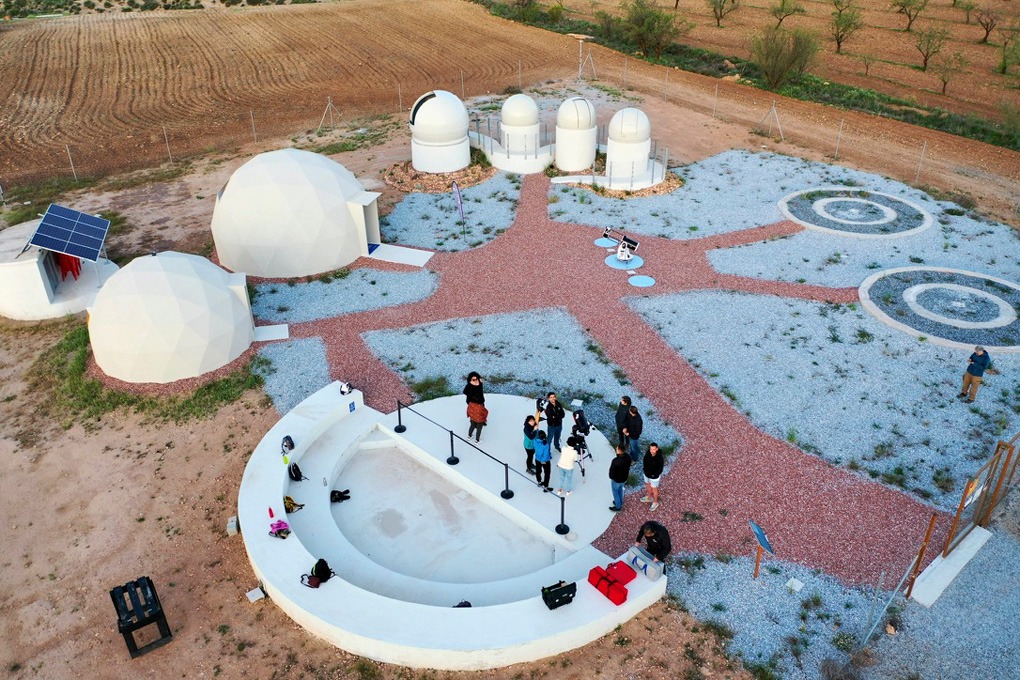
Check my publications in ADS!My most precious outreach project has been to build, with the help of my friends Miguel Gil and Migue Pugnaire, an amateur observatory fully devoted to astronomy education in Gorafe, Spain, at the heart of Granada’s (recently designated) UNESCO Global Geopark. The observatoryis the culmination of more than a decade of work in the rural areas of Andalusia doing hundreds of publicly-open, free astronomical observations, experiment shows and introduction courses in schools, and helping local businesses to use the night sky as a natural resource to attract low-impact, ecological, and socially-responsible tourism.
Visit us!
The first measurement of the magnetic field of an exoplanet: Planet-induced modulation of stellar activity in GJ 436 (led by my PhD student Daniel Revilla)
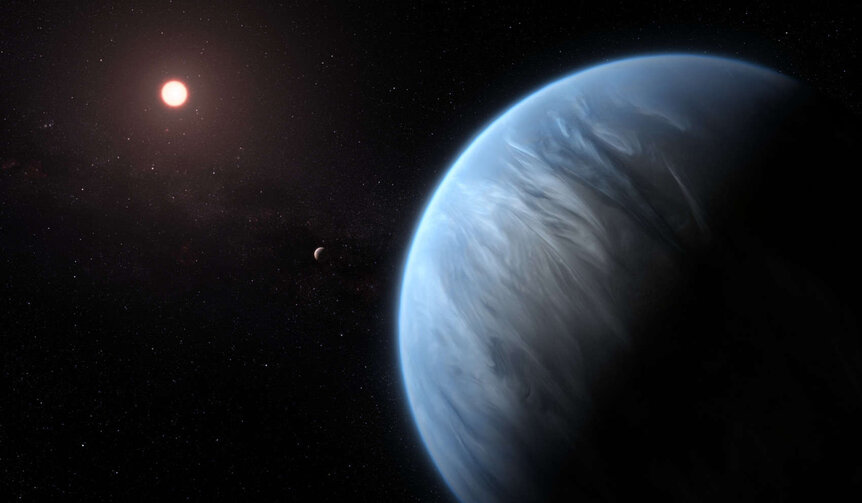
Insufficient evidence for DMS and DMDS in the atmosphere of K2-18 b
Four Sub-Earth Planets Orbiting Barnard's Star from MAROON-X and ESPRESSO (led by my PhD student Ritvik Basant)
A resonant sextuplet of sub-Neptunes transiting the bright star HD 110067
Density, not radius, separates rocky and water-rich small planets orbiting M dwarf stars
Planetary system around the nearby M dwarf GJ 357 including a transiting, hot, Earth-sized planet optimal for atmospheric characterization